
The Deadline: The Sharpest Sword in a Lawyer’s Daily Work
As a lawyer, few words carry as much weight as “deadline.” Meeting procedural deadlines is the backbone of your work. A missed deadline can mean not only the loss of a case, but also severe liability consequences. Deadline management is therefore one of your most sacred duties.
Yet while deadline tracking itself is often secured through specialized software and the four-eyes principle, one of the greatest dangers lies at the beginning of the chain: the intake of information. And one of the most unpredictable channels for this is the phone.
The Phone: Critical Information Source and Biggest Disruption
A call from the court, opposing counsel, or the client themselves: crucial information about deadlines is often communicated verbally. The phone is therefore an indispensable source, yet at the same time an enormous disruption to the focused work you need to do in order to meet those very deadlines.
The real risk arises in the hustle of daily operations:
- Acoustic misunderstandings: A date is misheard on the phone or only partially noted in a noisy environment.
- Lost notes: Information hastily scribbled on a piece of paper gets lost on the way from the phone to the desk.
- Incomplete documentation: It’s noted that a deadline exists, but not the exact conditions attached to it.
Each of these small errors in call handling can trigger an avalanche that ultimately jeopardizes timely processing.
How Calls Are Recorded in Writing
Imagine if every call were automatically converted into a written record, without you or your staff having to pick up a pen. That’s what modern communication systems can do.
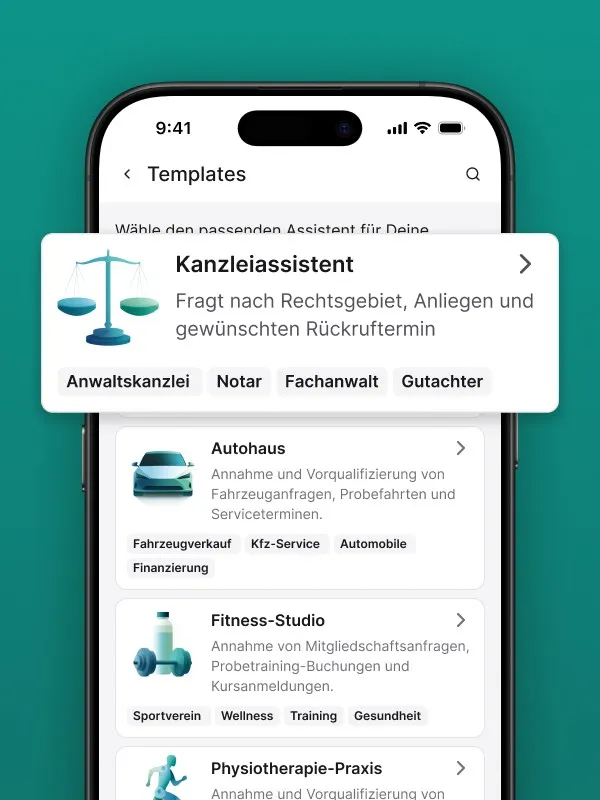
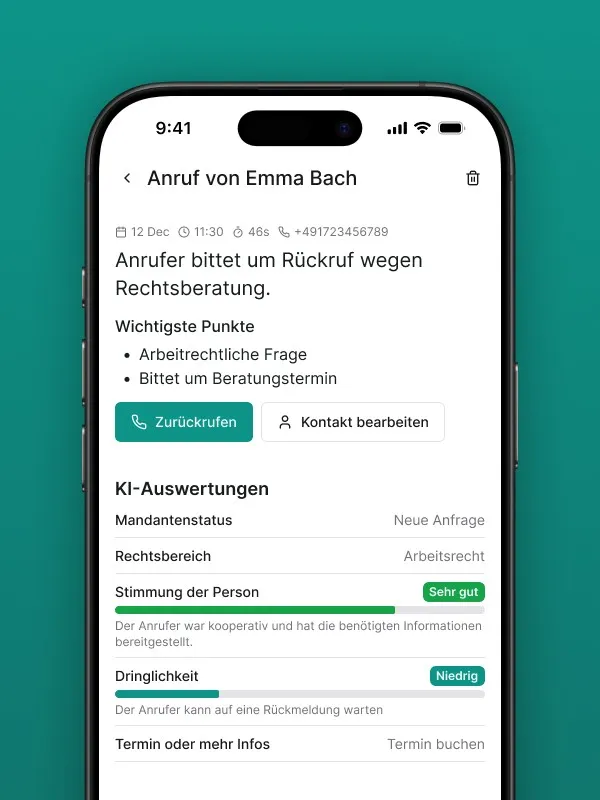
Instead of relying on your memory or handwritten notes, you can automate information capture. Modern AI assistants for law firms, like Safina for example, go beyond simple call answering. They help you document calls:
- Transcription: Every call is transcribed. If something is unclear, you can look at the written transcript. Speech recognition can mishear, though, especially names, numbers, and dates.
- Summarization: The AI summarizes the key statements, names, case reference numbers, and dates from the conversation. A summary can also contain errors or leave details out.
- Tasks as a prompt: From the summary, you can derive a task. The sentence “The statement of defense must be received by September 20” is then a hint that you check.
Transcripts and summaries help document calls. They do not replace your own review. You check the details and enter deadlines in your firm’s own deadline calendar. Safina does not promise that no deadline is missed. Deadline control stays in your firm.