

The Phone Rings, Yet Another Prescription Order
In every medical practice, the phone is the most important connection to patients. But it’s also one of the biggest sources of constant interruptions. A significant portion of daily calls revolves around a single, recurring task: ordering a repeat prescription.
Each of these calls, however brief, interrupts your medical assistants mid-task. They have to keep a patient waiting at reception, pause billing work, or rush out of preparing a treatment room, just to collect the same information every time: name, date of birth, medication. This flood of routine tasks ties up valuable resources that are urgently needed elsewhere: caring for patients who are actually in the practice.
The Traditional Answering Machine: Well-Intentioned but Error-Prone
Many practices have set up a separate answering machine for prescription requests. In reality, however, this often creates new problems:
- Incomplete information: Names are mumbled, the date of birth needed for identification is missing, or the medication is barely understandable.
- High manual effort: Your staff still has to listen to the recordings at set times, painstakingly transcribe the information, and check it for completeness. The time saved is minimal.
- No dialogue: The patient receives no confirmation of whether their order was successful or whether there are follow-up questions.
The traditional voicemail simply shifts the problem instead of actually solving it.
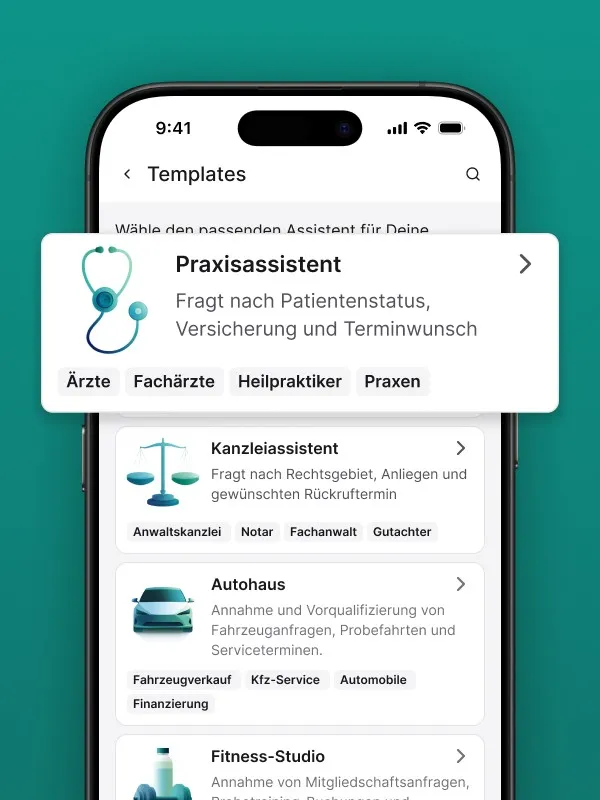
The Solution: A Digital Assistant for Structured Orders
Imagine your patients could order prescriptions around the clock without your practice phone ringing even once. And your team would receive a clean, error-free to-do list instead of countless calls and unclear voicemail messages.
That’s exactly what an automated, dialogue-driven process delivers. An intelligent phone assistant like Safina can be set up to handle the prescription ordering task completely on its own. Here’s how the process works:
- Guided conversation: A patient calling about a prescription is recognized by the system and guided through a structured dialogue.
- Systematic data collection: The assistant asks for all necessary information clearly and understandably: “Please state your full name now,” “Please spell your last name,” “Now please tell me your date of birth,” “Which medication and dosage do you need?”
- Automated task list: All collected data is converted into a perfectly formatted written message and sent to an email address you specify or directly to your practice management system.
Your team simply works through a clear list each morning without spending a single minute answering calls. The error rate drops dramatically, efficiency rises, and the atmosphere at reception becomes noticeably calmer, because your medical assistants can once again focus entirely on the people standing right in front of them.